1Lay everything out
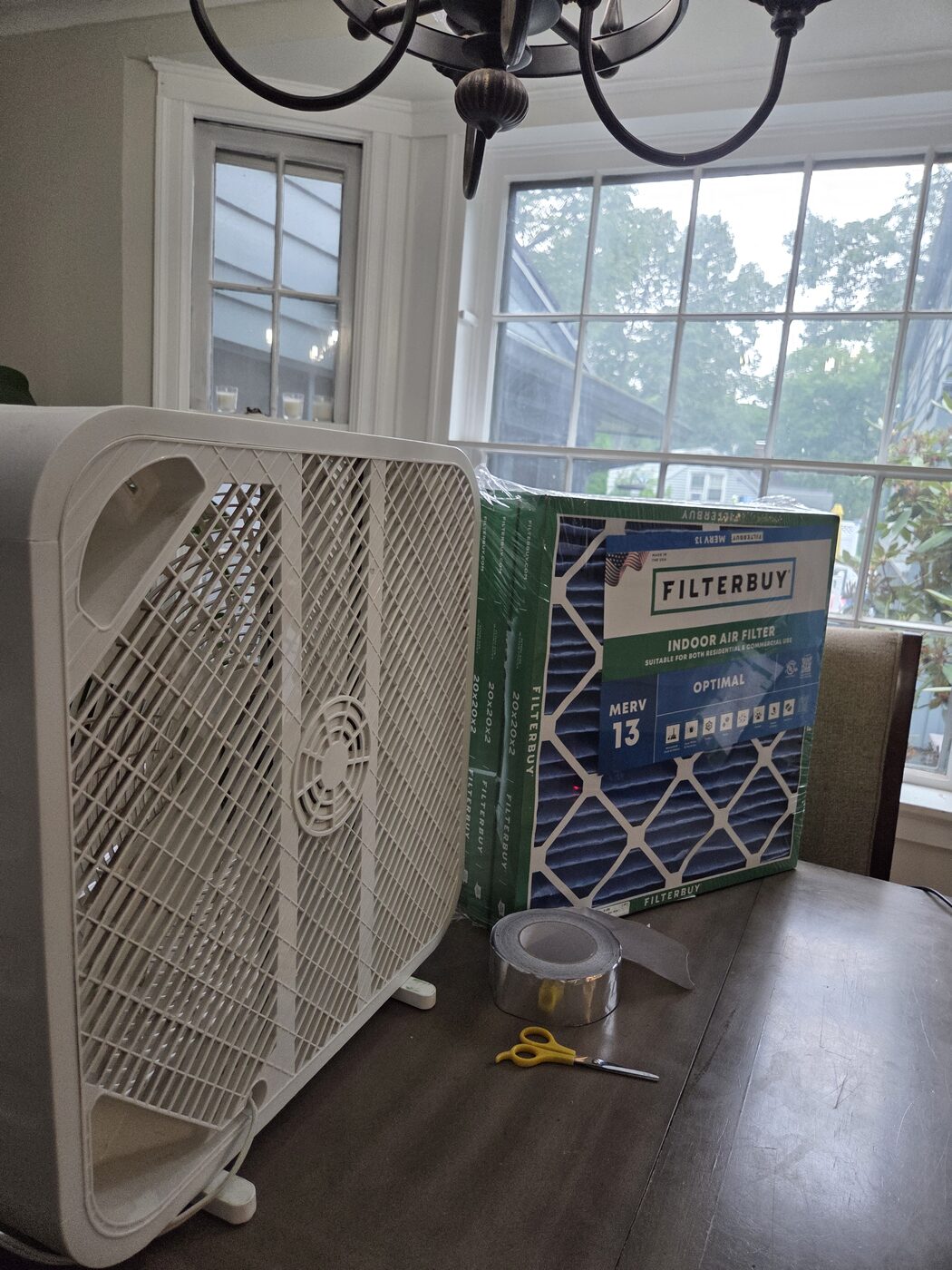
Fan, four filters, foil tape, scissors. That's the whole kit. Peel the plastic off the filters and find the air-flow arrow on each one before you start — it's easy to miss once they're taped together.
When the smoke rolls in, the air inside is the one part you can actually do something about — and it doesn't take a $1,000 machine. Tape a few furnace filters to a box fan and you've got something that pulls wildfire smoke, dust, and pollen out of a room surprisingly fast. People call it a Corsi–Rosenthal box, after the two folks who came up with it. I built one on my kitchen table — here's every step, with my own photos.
Here's the part that honestly surprised me:
That's for the fine smoke and dust — the particles you actually breathe in. The pricier machines add nice extras like carbon filters and sensors, but the core job, moving a lot of clean air through a room, this does just as well.
The "find" links point to Amazon — a few are affiliate links, so if you buy through them it helps keep AirAware free, at no extra cost to you. Want our specific picks? Our purifier guide has them.
Fan, four filters, foil tape, scissors. That's the whole kit. Peel the plastic off the filters and find the air-flow arrow on each one before you start — it's easy to miss once they're taped together.
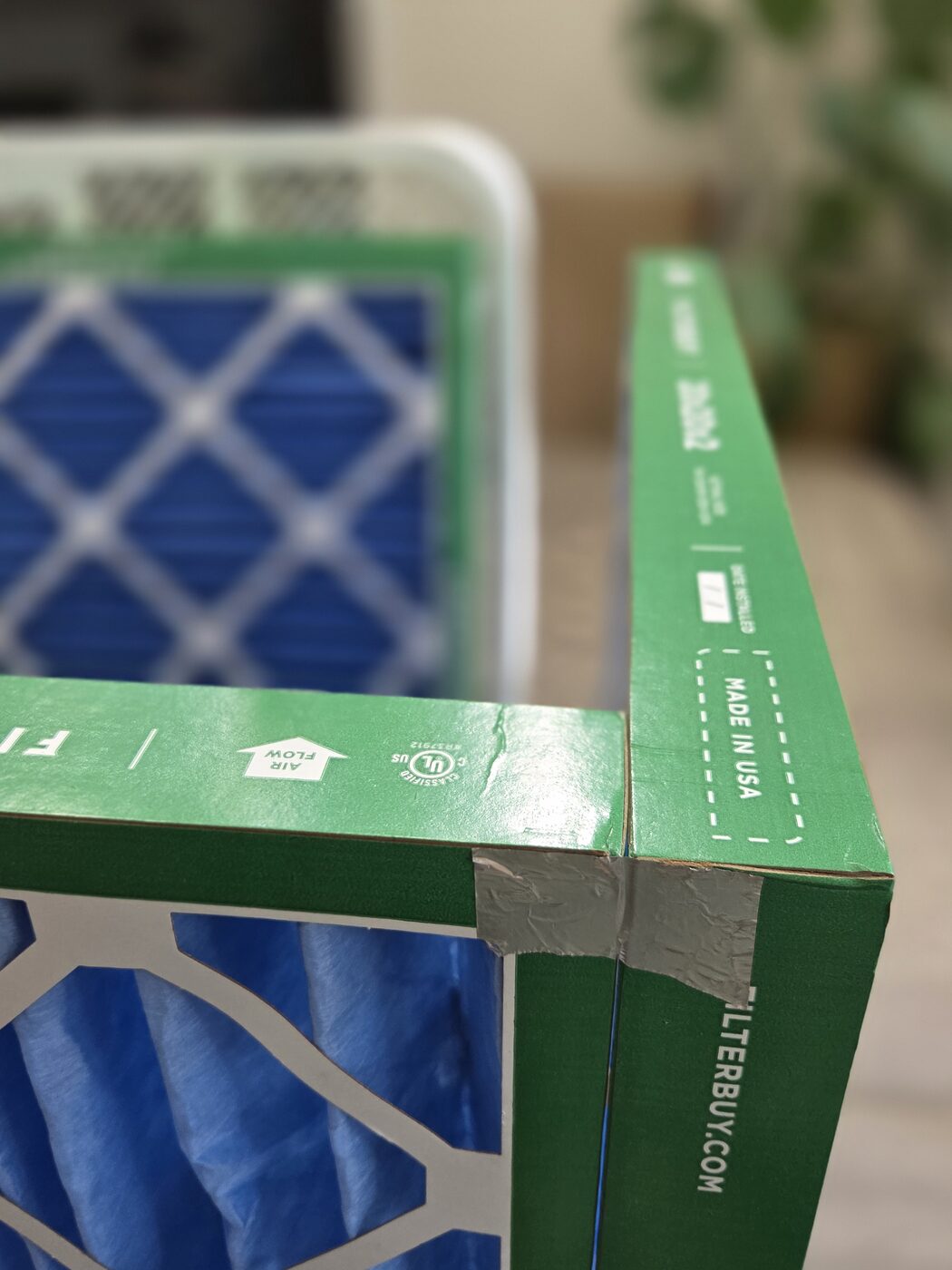
Stand two filters on their edges so they meet at a right angle, arrows pointing in, and run a strip of foil tape down the outside of the seam. Press it flat with your thumb. You've just made the first corner of the box.
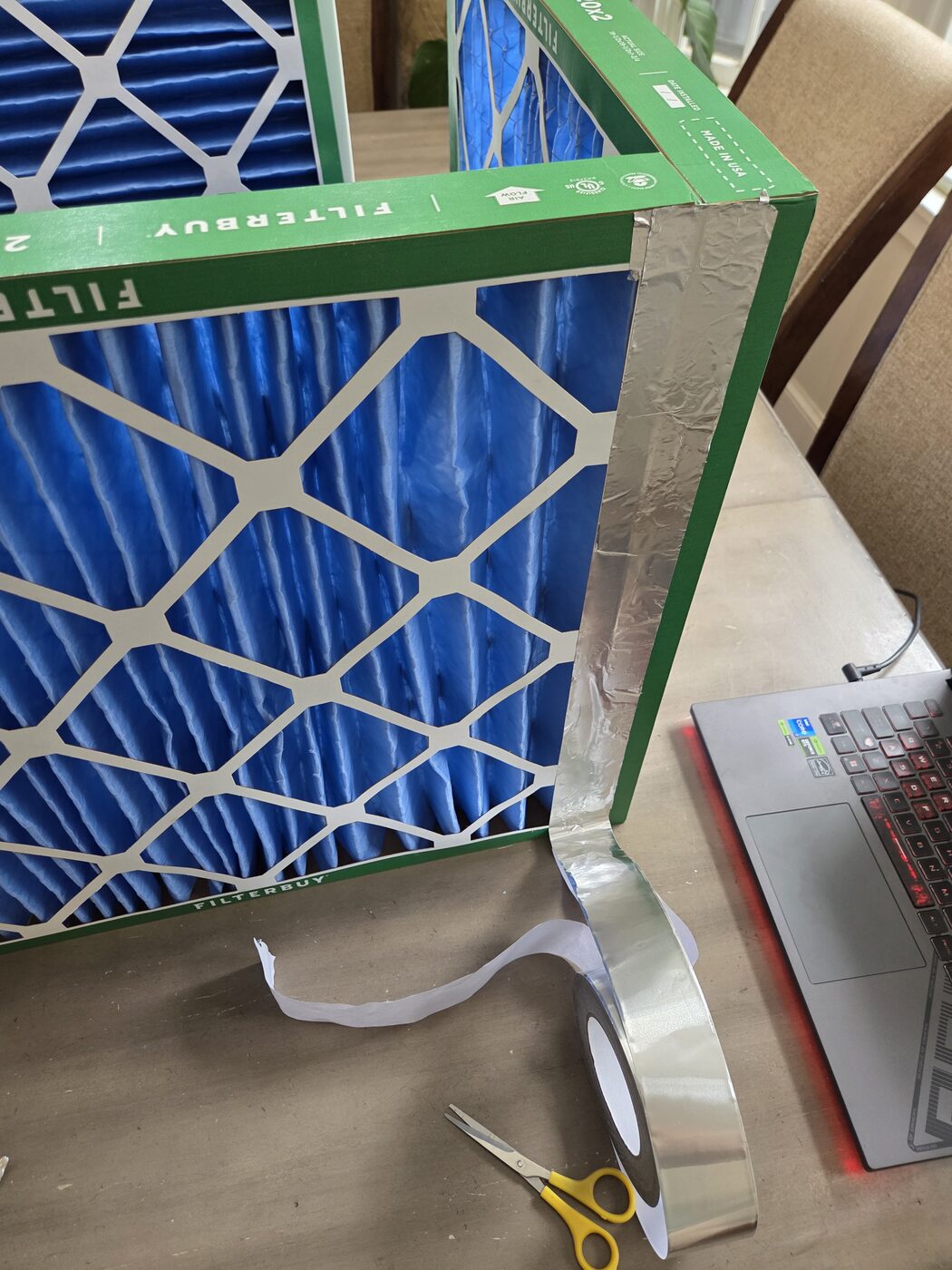
Bring in the third filter the same way and tape that seam too. Keep every joint tight — the foil tape isn't just holding things together, it's blocking the little gaps where dirty air would otherwise slip past the filters.
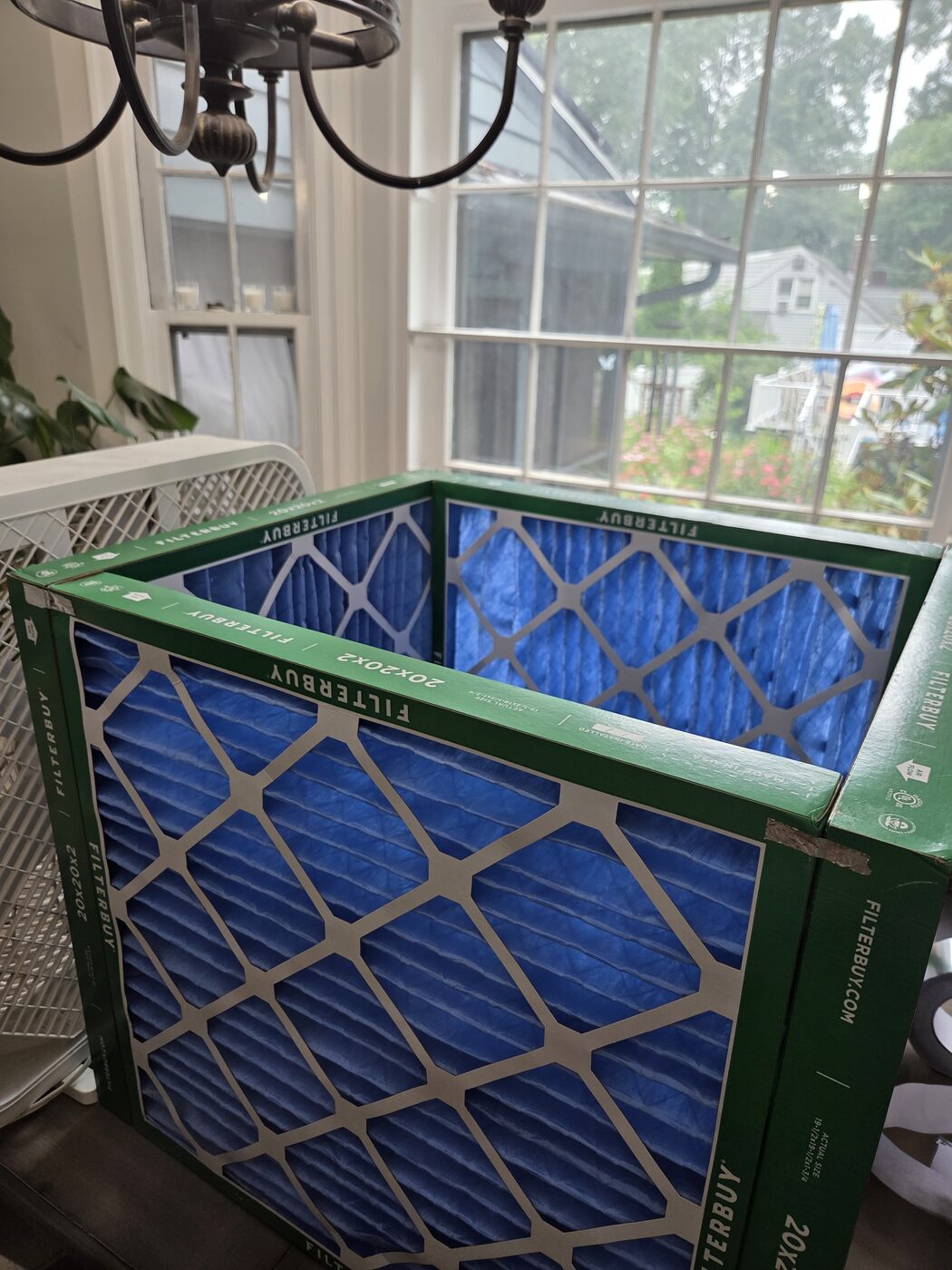
Add the fourth filter and tape the last corner. Now you've got a four-sided square tube, open at the top and bottom, standing about knee-high.
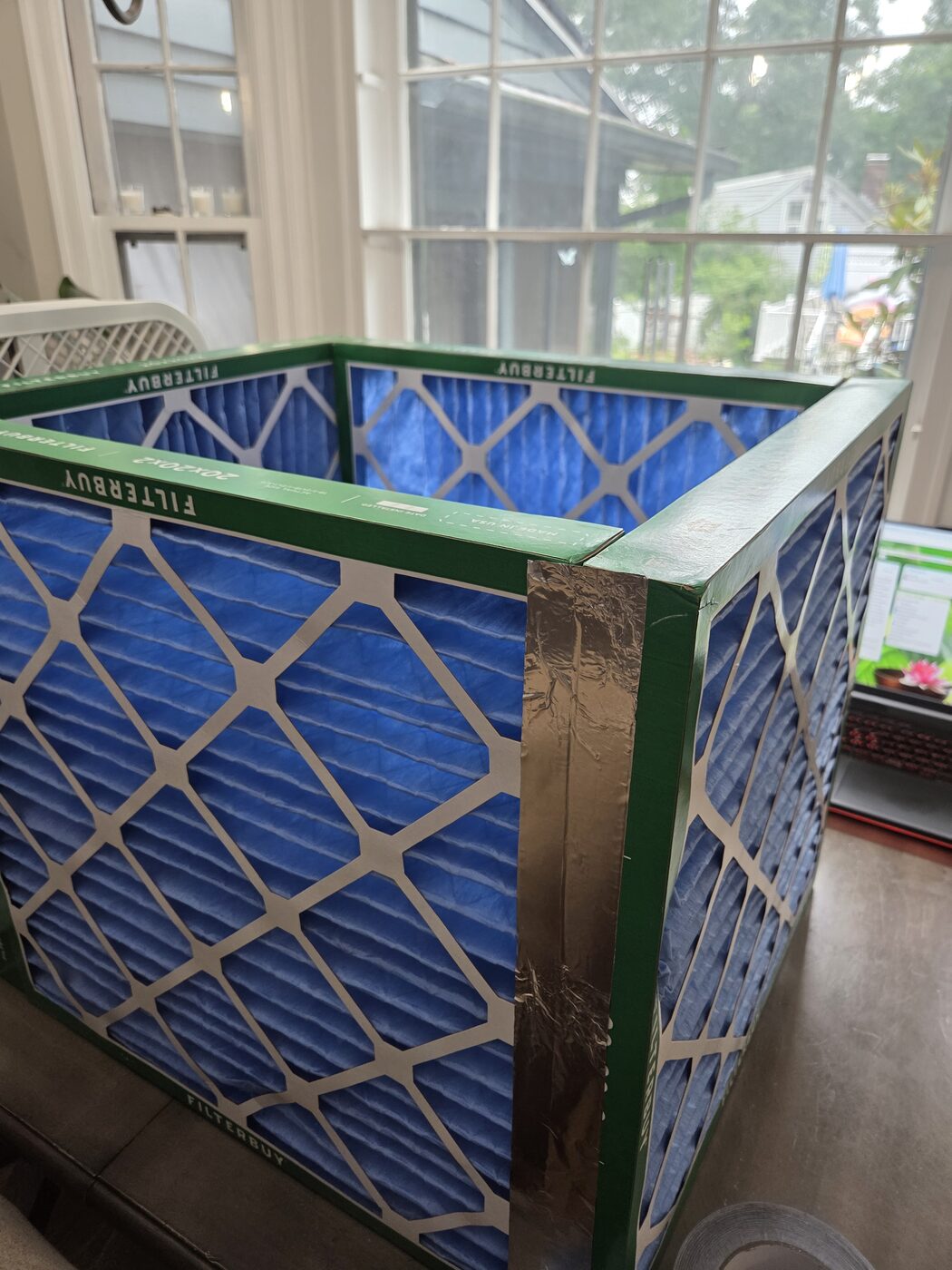
Go back over all four vertical corners and any spot that isn't fully sealed. Take your time here — a well-taped box is a quiet, efficient box. Gaps just let the fan pull in air that skipped the filter.
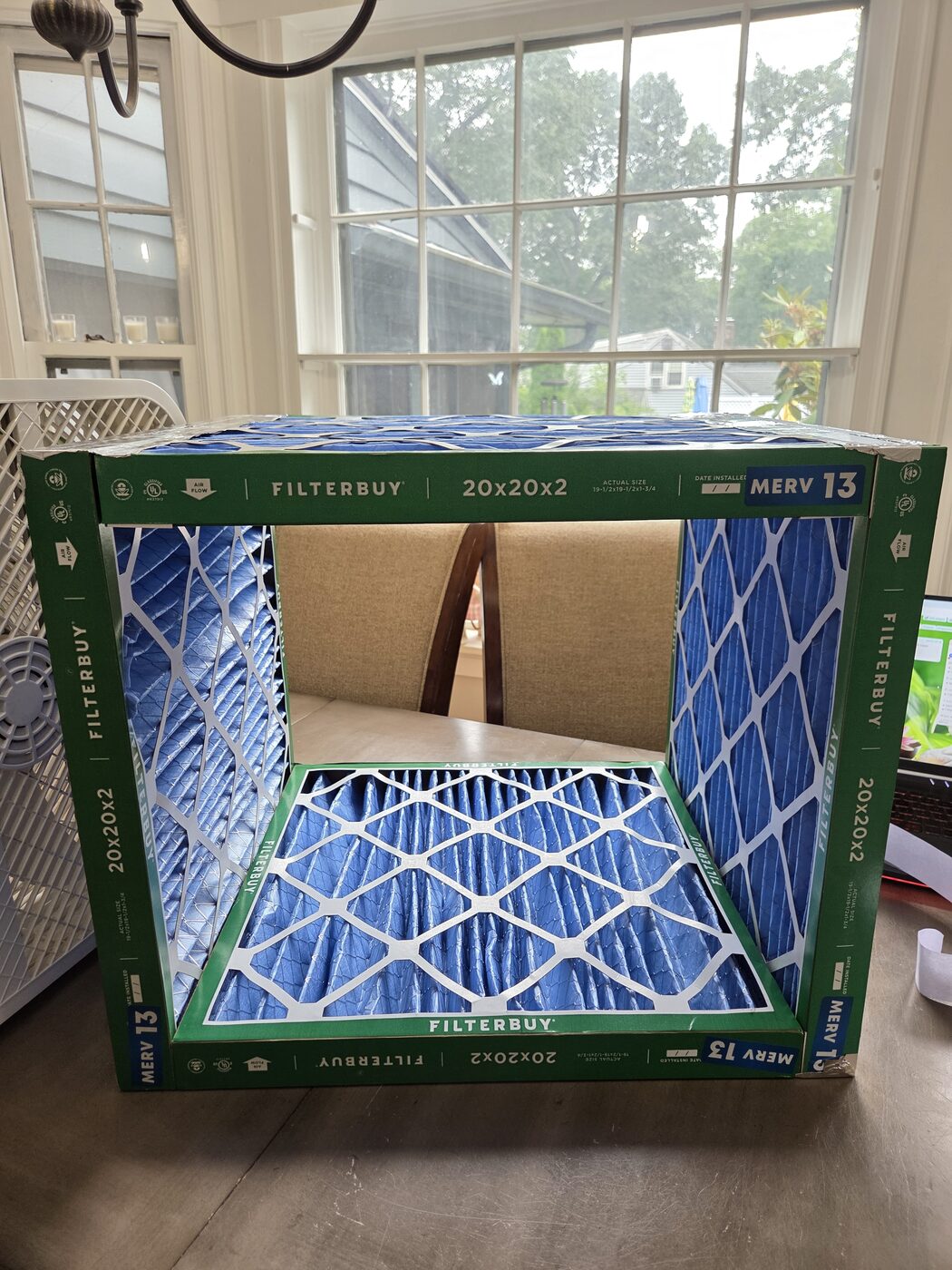
Cut a square of cardboard to fit the bottom opening — the box the filters came in is perfect — and tape it on. This forces the fan to pull air through the filter walls instead of straight up off the floor.
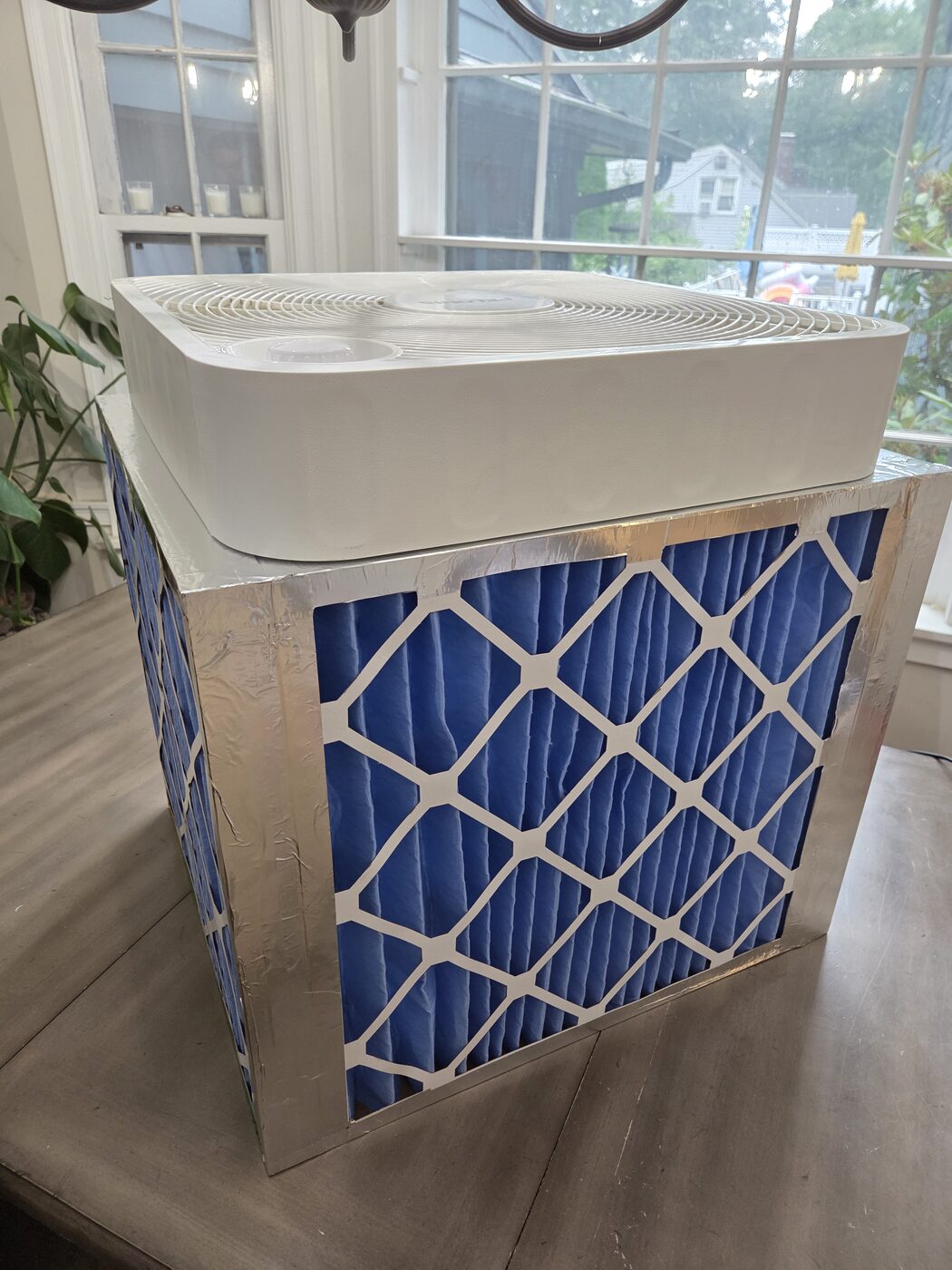
Sit the fan on top so it blows up and out, then tape around the edge to seal it to the filters. Give it a shove — it should feel solid. That's it: plug it in and it starts scrubbing the room.
I set a little Temtop air-quality monitor on top and filmed it running. In the first minute alone you can watch the numbers slip — no editing, just the box doing its thing:
Then I left it going. Same monitor, same spot, eight minutes later:
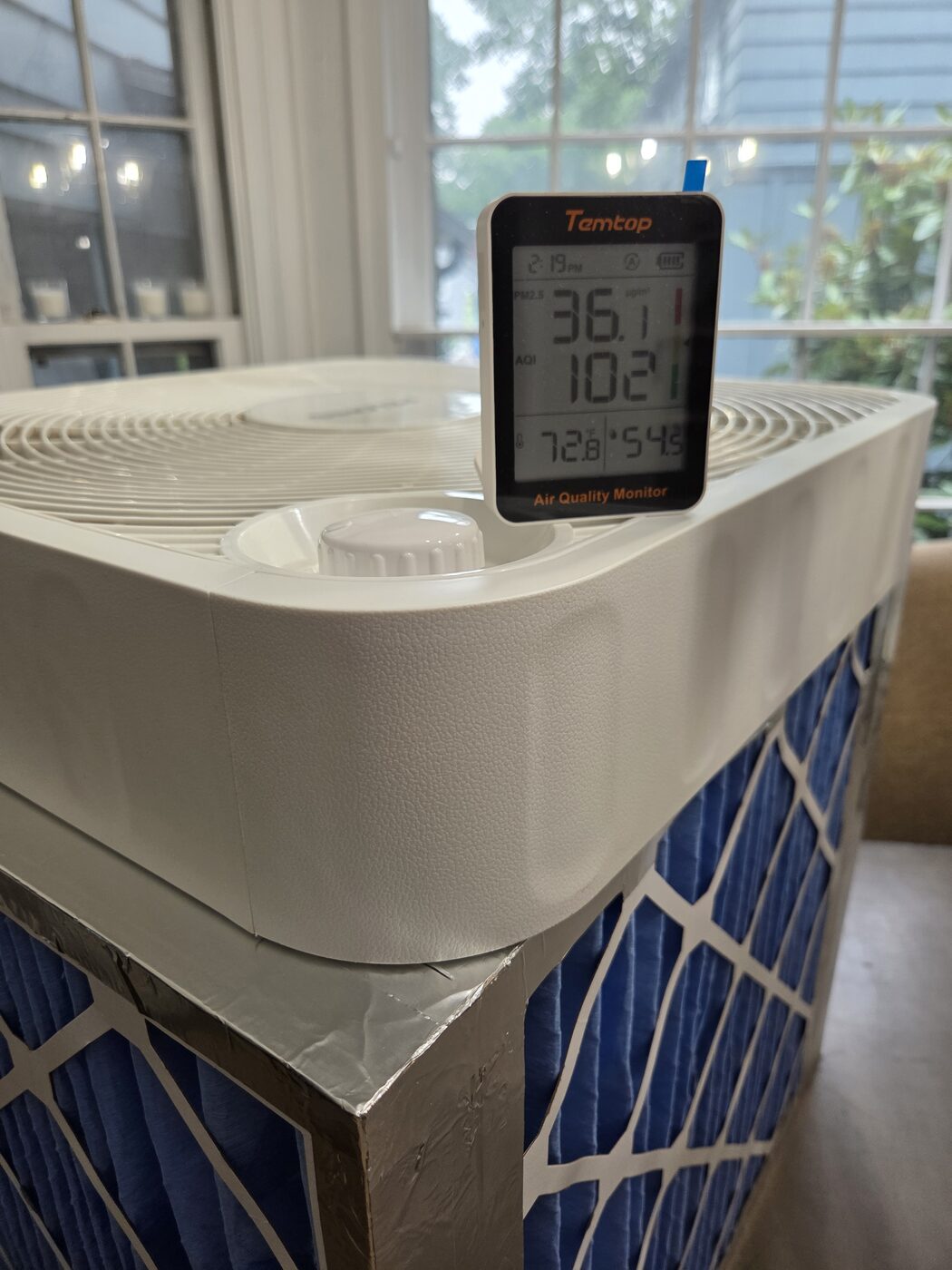
Across those nine minutes the PM2.5 fell from about 61 down to 36 µg/m³, dropping out of the red "Unhealthy" band and into orange — and it was still falling. Not bad for a fan and some tape. Run it on medium or high whenever the air outside is rough, and swap the filters once they look grey.
Nothing scary, just common sense with a plugged-in fan:
This is a well-known DIY design, not a certified appliance. It won't replace a respirator in truly hazardous air, but for everyday wildfire smoke and household dust it punches way above its price.
There's really not much to it — a box fan, four filters, and a roll of tape, for around $80 and an afternoon. Here's what I used, in case it saves you the hunting:
Those are affiliate links — if you buy through them a little comes back to keep this site going, at no extra cost to you. No pressure, though; the exact same stuff is at any hardware store.